
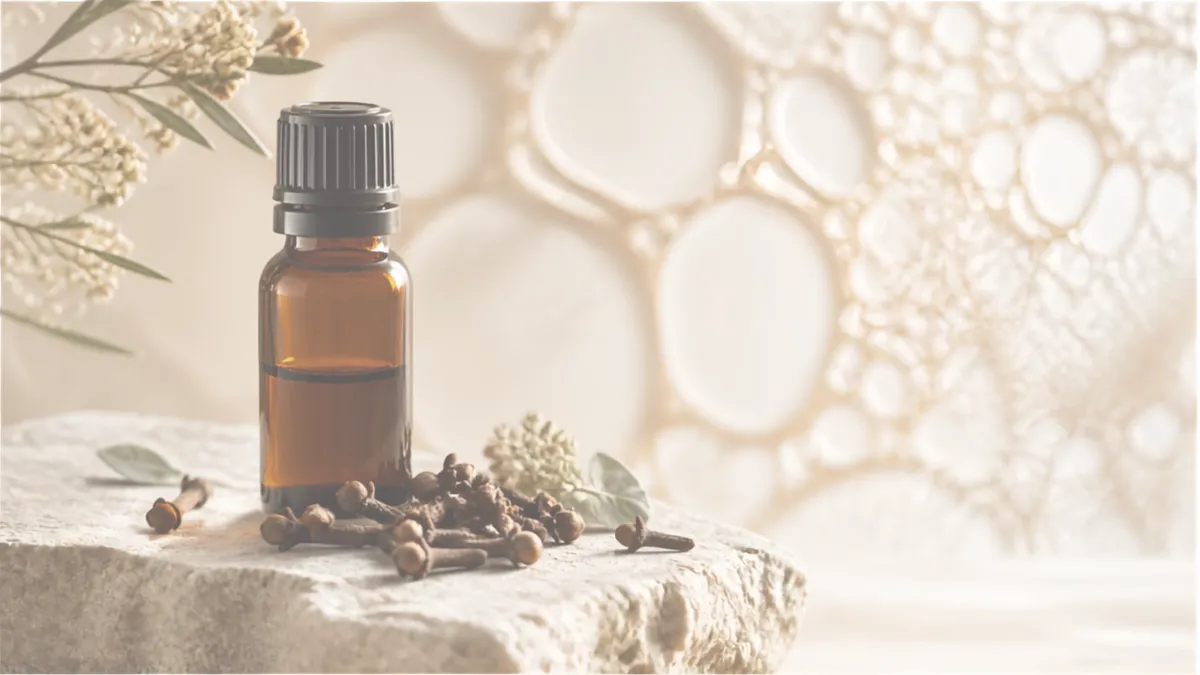
Why I’m Paying Attention to Clove Essential Oil for Healthy Ageing
Essential oils are a powerful wellness strategy that’s still overlooked by many, largely because they don’t fit neatly into conventional categories. And there isn't much incentive for larger corporations because they can't patent natural substances.
I’m interested in how I look and feel long term. Not just my skin, but my energy, my resilience, how well my body recovers, and how much underlying inflammation I’m carrying as I get older. When I read research, that’s the lens I’m reading through. How I look and feel my best life for the longest period of time.
Two clove studies caught my attention this week, one because it looked at "cellular stress". Skin health is downstream from that. If cells are under constant oxidative load, repair slows, inflammation increases, and ageing accelerates. Anything that supports the body at that level is relevant to me, regardless of which tissue the study happens to focus on.
What I found interesting was how clove appeared to support the cell’s own protective systems. That matters, because long-term health isn’t built through one intervention. It’s the cumulative effect of many small inputs, consistently reducing stress on the system.
That’s how I think about essential oils. As one part of a broader strategy that adds up over time. Much like eating vegetables or taking supplements.
The second study landed for different reasons.
In January last year, I was extremely unwell with RSV. I was lying on the floor while my family was out skiing, not well enough to read, watch television, or do anything other than get through it. I recovered, but I don’t feel like the inflammation ever fully resolved.
My breathing isn’t as deep. My head and ears get jammed up more often and I'm more easily congested than I used to be. I definitely got sick more often last year after the major virus had resolved. It’s not extremely dramatic, but it’s noticeable, and it’s persistent and it annoys me.
Since then, I’ve had so many women tell me similar things. Ongoing sinus issues. Congestion that they can't get rid of. A sense that their lungs or upper airways are not as vital as they once were.
So when I read a study looking at clove essential oil in the context of lung tissue, microbial load, and inflammation, it immediately felt relevant. Something worth playing with.
This is always how I approach research. I’m looking for relevance and for ways to interpret what I’m reading into real life. I also love an "N=1 experiment". So I research, I think, I run it through my own sense of whether it feels right for me and then I pay attention for how my body responds.
Clove sits in my mind as an oil that supports the body when there’s lingering stress in tissues - whether that’s skin, lungs, or sinuses. Not as a single solution, but as part of a layered approach that builds resilience over time.
What the Clove Studies Actually Found (In More Detail)
Study One: Clove Oil and Cellular Stress
The first study looked at clove essential oil in the context of "oxidative stress at a cellular level". Oxidative stress occurs when cells are exposed to more reactive oxygen species than they can neutralise, leading to damage to DNA, proteins, and cell membranes. Over time, this contributes to inflammation, accelerated ageing, and reduced tissue repair.
In this study, researchers exposed cells to conditions that induce oxidative damage, then introduced clove essential oil to observe how the cells responded.
What they found was that clove essential oil:
significantly reduced markers of oxidative DNA damage
improved cell survival under oxidative stress
supported the activity of the cell’s own antioxidant defence systems
Rather than acting as a simple “antioxidant mop”, clove appeared to influence "endogenous protective pathways" - the systems cells already use to manage stress and repair damage.
This is important because long-term health and ageing aren’t determined by a single hit of oxidative stress. They’re shaped by how well cells cope with repeated, ongoing exposure. Supporting those internal defence systems is one way to reduce cumulative cellular load over time.
From a skin perspective, this matters because skin ageing is not just about surface exposure. It reflects what’s happening deeper at a cellular level. Cells under constant oxidative pressure repair more slowly, signal more inflammation, and lose resilience earlier.
Why Oxidative Stress Matters Far Beyond Skin - Especially Through Menopause
Oxidative stress isn’t a niche concept. It’s one of the underlying processes involved in how the body ages, repairs, and copes with cumulative pressure over time.
When oxidative stress rises and stays elevated, we tend to see:
slower tissue repair
increased inflammation
changes in vascular health
altered immune response
reduced resilience to physical and emotional stress
This is relevant to everyone, but it becomes particularly important through the peri and menopausal transition.
Oestrogen has a buffering effect in the body. It supports antioxidant activity, modulates inflammation, and helps stabilise multiple systems at once - including skin, blood vessels, brain tissue, lungs, and connective tissue.
As oestrogen declines, that buffering effect is reduced.
What many women notice isn’t one dramatic symptom, but a general sense that:
recovery takes longer
inflammation lingers
stress feels harder to metabolise
skin, joints, lungs, and sinuses don’t bounce back as easily
From a physiological perspective, this makes sense. The loss of oestrogen shifts the balance toward "higher oxidative load and lower tolerance to stress", particularly at a cellular level.
This is why I find the clove research interesting in a broader health context.
The first study showed clove supporting cells under oxidative stress by influencing their internal protective systems. That becomes more relevant in a body that no longer has the same hormonal buffering it once did.
It’s about supporting the body in a different phase of life, where regulation and recovery require more conscious input.
Study Two: Clove Oil, Lung Tissue, and Inflammation
The second study explored clove essential oil in a "preclinical model involving lung tissue", microbial load, and inflammation.
The researchers were interested in how clove essential oil affected:
microbial burden in lung tissue
inflammatory markers
tissue integrity and damage
In this model, clove essential oil was administered consistently over a set period and compared against a conventional antifungal agent as a reference point.
The findings showed that clove essential oil:
reduced microbial load in lung tissue
was associated with lower levels of inflammation
showed signs of protecting lung tissue structure
did not produce significant toxicity in major organs in that model
What’s notable here is that the study didn’t just measure microbial activity. It looked at "how the tissue itself responded" - inflammation, damage, and recovery.
This matters because lung and sinus issues often persist not due to active infection, but due to unresolved inflammation and tissue irritation following illness. When inflammation lingers, tissues don’t fully return to baseline, and people notice ongoing congestion, reduced breathing capacity, or increased susceptibility to getting sick again.
That’s why this study stood out to me. It explored clove in a context where "tissue stress and inflammation" were central, not just the presence of microbes.
Why These Two Studies Belong Together
When you look at these studies side by side, a clear pattern emerges.
Clove essential oil shows activity in environments where:
oxidative stress is high
inflammation is present
tissues are under sustained load
recovery is incomplete
This isn’t about a single symptom or a single system. It’s about "reducing the background stress in cells and tissues", whether that’s in skin, lungs, or sinuses.
That’s what makes clove interesting to me - not as a one-off solution, but as part of a layered, cumulative approach to health and longevity.
Want to Learn How I Use Essential Oils This Way?
If this way of thinking about essential oils resonates - as a strategic, long-term wellness approach, not a quick fix. I’d love to share more with you.
Inside our Creating Conscious Wellness Young Living wellness tribe, we teach women how to:
choose high-quality essential oils
understand why and when to use them
integrate them into daily life for skin health, recovery, and resilience
If you’d like to learn more about joining my Young Living wellness crew, reach out and message me. I’m always happy to talk through what this looks like in real life.